
Types of Flies in Texas: How to Identify and Get Rid of Them
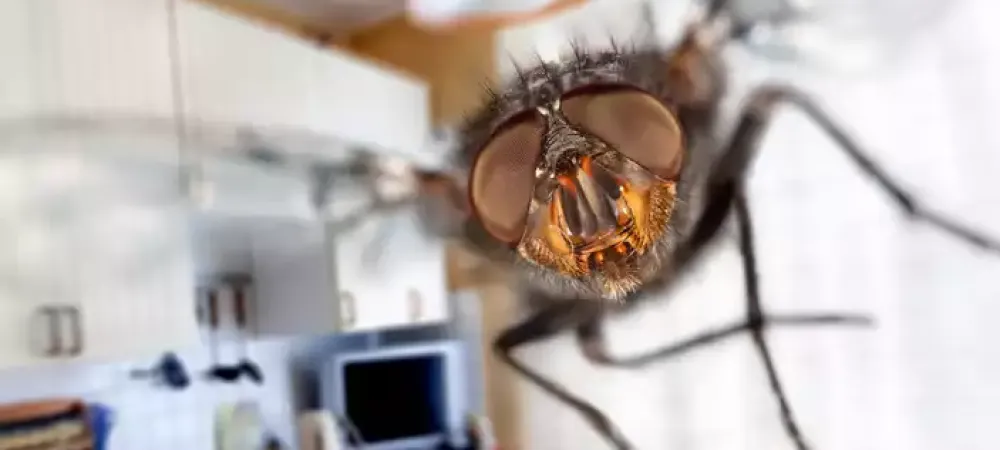
The most common flies found in Texas homes are house flies, stable flies, drain flies, fruit flies, and phorid flies. Each type breeds in a different food source, from garbage and manure to standing water and overripe produce, so identifying which fly you're dealing with is the first step to solving the problem.
This guide breaks down how to tell them apart, why they show up on your property in the first place, and what to do next.
What Kind of Fly Is in My House?
You can identify a fly by where it breeds and what it looks like. Here's how the five most common Texas fly species compare.
House flies are gray, about a quarter-inch long, and have two dark stripes running down the length of their thorax. Females lay eggs directly in organic matter such as garbage cans, compost piles, and animal waste. Once the eggs hatch, the larvae feed on that same material, and adults move on to liquids and food residue around the kitchen.
Stable flies look a lot like house flies but are slightly larger and deliver a noticeable bite, usually around the ankles. Their larvae develop in decaying organic matter and manure, which is why they're common near yards with pets, livestock, or grass clippings left to rot.
Drain flies are small, fuzzy-winged flies often mistaken for tiny moths. They're drawn to standing water in septic tanks, sewage lines, and slow or clogged drains, which makes them a frequent problem in kitchens, bathrooms, and commercial spaces like restaurants.
Fruit flies are small and tan to dark brown, and they're almost always found near overripe fruit, vegetables, or other decaying produce. A few fruit flies in the kitchen usually points to something ripening, or rotting, on the counter or in the trash.
Phorid flies are small and often confused with fruit flies, but they move in a distinct quick, darting pattern and tend to run across surfaces rather than fly directly. They're attracted to garbage cans, compost, and other decaying organic matter.
Fly Type Comparison at a Glance
Here's a side-by-side look at how each fly type differs by appearance and breeding source.
| Fly Type | Appearance | Breeding Source |
|---|---|---|
| House Fly | Gray, two dark stripes | Garbage, compost, animal waste |
| Stable Fly | Similar to house fly, slightly larger, bites | Manure, decaying organic matter |
| Drain Fly | Small, fuzzy, moth-like | Standing water, drains, septic systems |
| Fruit Fly | Tiny, tan to dark brown | Overripe fruit and produce |
| Phorid Fly | Small, humpbacked, quick and darting | Garbage, compost, decaying matter |
Why Are Flies a Problem Beyond Being Annoying?
Flies land on garbage, drains, and decaying matter before landing on food prep surfaces, countertops, and outdoor food at cookouts and parties, which makes them a sanitation concern wherever food is present. A fly problem at a backyard event or inside a kitchen is usually a sign there's an active breeding source nearby that needs to be found and removed.
Spraying alone won't stop a fly problem for long if the breeding source is still active. A few flies today can turn into dozens within a couple of weeks if garbage, standing water, or decaying matter isn't addressed.
How Do I Get Rid of Flies?
Getting rid of flies starts with removing the breeding source. Work through these steps in order:
- Keep garbage cans sealed and cleaned on a regular schedule
- Avoid letting produce overripen on the counter, and refrigerate what you can
- Fix slow-draining sinks and clean drain buildup regularly
- Clean up pet waste and yard debris that could attract stable flies
- If flies keep coming back after these steps, schedule a professional inspection to locate the source
Frequently Asked Questions
Flies are drawn to garbage, standing water, pet waste, overripe produce, and any source of decaying organic matter. Removing these sources is the most effective way to reduce fly activity.
House flies typically live two to four weeks under normal conditions, but a single female can lay hundreds of eggs during that time, which is why a small fly problem can grow quickly.
Flies that land on garbage or waste and then move to food prep areas or exposed food are a sanitation concern. Keeping food covered and surfaces clean reduces the risk of cross-contamination.
If flies keep returning after basic sanitation steps like sealing garbage and fixing standing water, the breeding source likely hasn't been eliminated. A pest control professional can inspect the property, locate the source, and recommend a targeted treatment plan.