
What Kind of Spiders Are Common in Austin Homes?
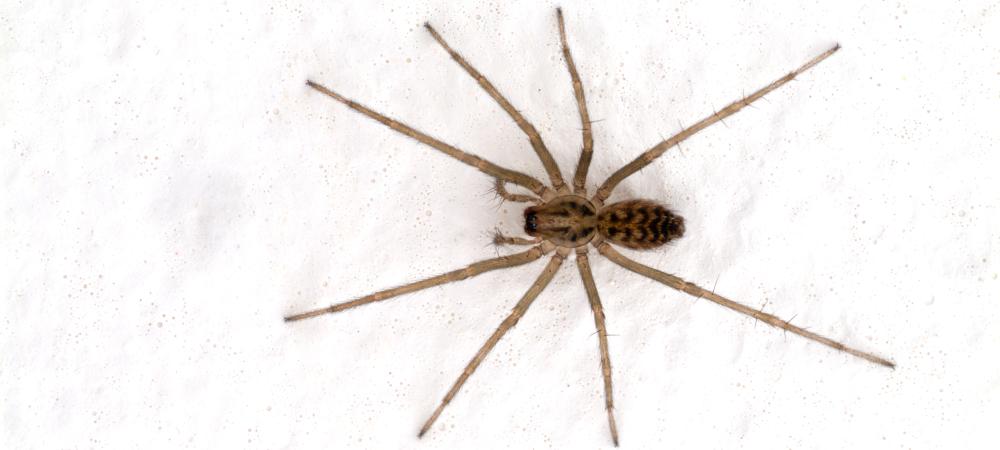
Austin homes commonly see five spiders: wolf spiders, common house spiders, cellar spiders, black widows, and brown recluses. Most are harmless. Two, the black widow and the brown recluse, are worth learning to recognize on sight.
Here's a closer look at each one, the spiders that get mistaken for them, when spider activity tends to spike in Austin, and what to do if you find one in your home.
Common House Spiders in Austin
Wolf Spiders
Wolf spiders hunt on the ground instead of building webs, relying on speed and eyesight to catch prey at night rather than waiting for something to wander into silk.
Females carry their egg sac attached to their spinnerets, and after the spiderlings hatch, she'll carry dozens of them on her back for a week or two. Startling to see up close, but normal behavior, not a sign of infestation.
Common House Spiders
These build the messy, irregular webs most people picture when they think "cobweb," different from the neat, circular kind, and they're often left in place undisturbed for weeks at a time.
They actually work in a homeowner's favor, feeding on mosquitoes and flies, and only bite if trapped directly against skin.
Cellar Spiders
When disturbed, cellar spiders vibrate their web rapidly, a defense move that makes them look more aggressive than they actually are.
They're frequently mistaken for baby brown recluses because of their light brown color, but their legs are far too long and thin relative to their body for that comparison to hold up on closer look.
Common House Spiders at a Glance
| Spider | Key ID Feature | Where It Hides | Typical Reaction to a Bite |
|---|---|---|---|
| Wolf spider | Large, hairy, fast on the ground | Garages, window wells, woodpiles | Comparable to a bee sting |
| House spider | Small, brown-gray, messy web | Corners, closets, window sills | Mild, like a mosquito bite |
| Cellar spider | Long thin legs, tiny body | Basements, crawl spaces, garages | Not a bite concern |
The Two Spiders Worth Knowing
Black Widow Spiders
The southern black widow is established in Austin and shows up indoors more often than most homeowners expect. Females are shiny black with a red hourglass mark on the underside of the abdomen.
Because a black widow bite can cause a stronger reaction than most household spiders, it's worth knowing the identifying marks so you're not caught off guard if one turns up in a garage, meter box, or storage area.
Brown Recluse Spiders
The brown recluse is the spider Central Texas is best known for. Light to dark brown with a violin-shaped marking on the back, and six eyes arranged in three pairs instead of eight.
Reactions to a recluse bite can vary quite a bit from person to person, which is part of why this spider gets more attention in Central Texas than most other household species.
Spiders That Get Mistaken for a Black Widow or Brown Recluse
Homeowners flag a lot more "recluses" than actually turn up, mostly because several harmless spiders share the same brown coloring and similar habitat:
- Southern house spiders: Males are often confused for recluses because of their size and brown color, but they lack the violin marking and have noticeably longer, thinner pedipalps.
- Texas recluse: A close relative of the brown recluse with the same violin mark and six-eye arrangement, but a lighter, yellowish-tan color. Treated the same way if found indoors.
- Wolf spiders and huntsman spiders: Mistaken for recluses at a glance due to brown color and long legs, but larger size and no violin marking set them apart.
- Funnel weaver spiders: Brown and hairy-bodied, but they build distinctive funnel-shaped webs that recluses don't.
If you're not sure what you're looking at, the safest move is to avoid handling it and get a photo instead. A trained technician can identify a spider far more reliably than an online image search.
When Spider Activity Picks Up in Austin
Spider sightings inside Austin homes tend to increase in two windows: late spring through early summer, when spiderlings from the previous year's egg sacs mature and start looking for their own territory, and again in early fall, when cooling temperatures push spiders indoors looking for warmth. Homes with an active insect population indoors will see spider activity year-round, since spiders follow their food source regardless of season.
What Attracts Spiders to a Home
Spiders don't come inside looking for shelter alone. They come in following food. A home with an active population of ants, roaches, moths, or crickets will attract spiders looking for an easy meal, and clutter in garages, attics, and closets gives them undisturbed places to build webs and lay egg sacs. That combination, food source plus untouched storage space, is why those areas consistently show the most spider activity.
Spider Prevention Tips for Austin Homeowners
Once you know what's coming inside and why, keeping spiders out comes down to a handful of habits around the house:
- Seal cracks around windows, doors, and the foundation.
- Install door sweeps and repair damaged window screens.
- Store items in sealed plastic bins instead of cardboard boxes; recluses and widows both favor cardboard for egg-laying.
- Reduce clutter in garages, attics, and closets.
- Keep firewood and debris piles away from the exterior walls.
- Vacuum regularly, especially corners, closets, and under furniture, to remove webs and egg sacs before they hatch.
- Address the insect population indoors; fewer prey means fewer spiders staying around.
When to Call a Pest Control Professional
An occasional spider sighting usually isn't cause for alarm. It's time to call a professional if:
- You find a black widow or suspected brown recluse indoors.
- You're seeing spiders regularly rather than the occasional one.
- You find egg sacs, which signal an active breeding population rather than a single spider passing through.
Frequently Asked Questions
Are there tarantulas in Austin?
Tarantulas exist in Texas but are far more common in dry, rural parts of Central and West Texas than inside Austin homes. Most large, hairy spiders found indoors in Austin are wolf spiders, not tarantulas.
Do brown recluse spiders really live in Texas?
Yes. The brown recluse is established throughout Central Texas, including Austin, and lives indoors in dark, undisturbed spaces like attics, closets, and garages.
What's the difference between a brown recluse and a Texas recluse?
Both have the same violin marking and six-eye arrangement. The main visible difference is color: brown recluses run light to dark brown, while Texas recluses are a lighter, yellowish-tan. They're treated the same way if found in a home.
How can I tell a black widow from a harmless spider?
Look for a shiny black body and the red hourglass mark on the underside of the abdomen. Only mature females have this marking; males and juveniles look different and are harder to identify without experience.
How can I reduce spiders without pesticides?
Reducing clutter, sealing entry points, and vacuuming webs and egg sacs regularly will cut down on activity over time. For an active infestation, especially of black widows or recluses, professional treatment is more reliable than DIY methods.
Can pest control get rid of spiders for good?
Professional treatment significantly reduces spider activity by targeting both the spiders and the insects they feed on, but it works best paired with regular prevention steps. Ongoing service keeps new spiders from moving back in as conditions change with the seasons.