
What Do Fire Ants Look Like?
Fire Ant Guide
What Do Fire Ants Look Like? How to Identify Them in Texas
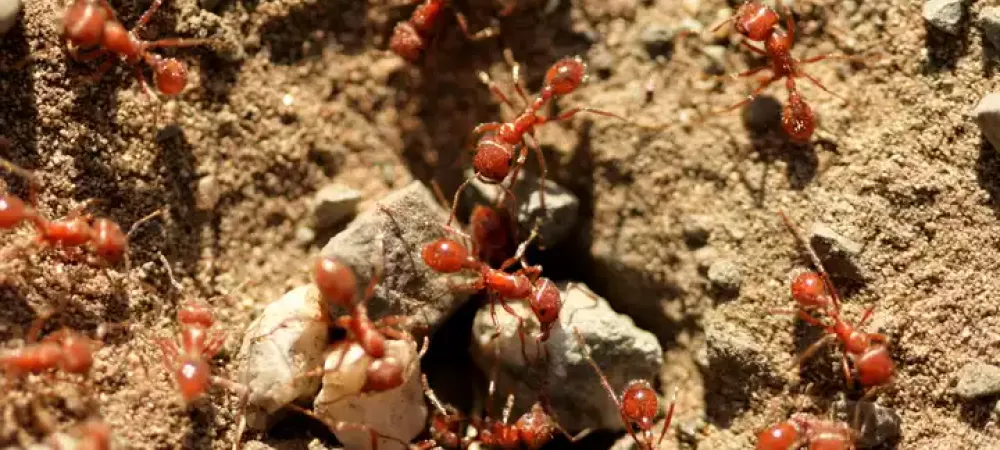
Fire ants are reddish-brown to reddish-black in color, 1/8 to 3/8 of an inch long, and have a two-segmented waist and a visible stinger at the tip of the abdomen. They are most commonly confused with regular red ants or harvester ants, but their mounds and aggressive swarming behavior set them apart.
Texas is one of the most fire ant-dense states in the country. If you live in the Houston area, San Antonio, Austin, or anywhere in Central or Southeast Texas, identifying fire ants correctly can prevent painful stings and help you act fast.
Fire Ant Identification: Key Physical Traits
Fire ants have a distinct set of physical characteristics that separate them from other ant species you might see in your yard.
If you're unsure what you're looking at, the mound is often the easier identifier.
How to Identify a Fire Ant Mound
Fire ants build dome-shaped mounds of loose, fluffy soil with no visible entry hole on top. Mounds typically range from 6 inches to 18 inches tall and can grow much larger after heavy rain.
- No central opening — fire ants enter and exit through underground tunnels
- Found in open, sunny areas like lawns, pastures, roadsides, and schoolyards
- Soil appears loose and disturbed around the mound base
- Disturbing the mound causes ants to swarm rapidly to the surface
In Texas, fire ant mounds are most visible after rain, when colonies move upward to dry out. A single backyard can contain multiple mounds from one colony that has spread underground.
What Do Fire Ant Stings Look Like?
Fire ants both bite and sting. They bite to anchor themselves, then use their abdominal stinger to inject venom. Most people feel an immediate sharp burning sensation.
- Immediate pain. A sharp, burning or pinching sensation starts within seconds.
- Redness and swelling. The sting site becomes red and raised, similar to a mosquito bite.
- Pustule formation. Within 8 to 24 hours, a white, fluid-filled blister develops. This pus-filled bump is the hallmark of a fire ant sting.
- Itching. The area becomes intensely itchy for several days. Scratching can cause a secondary infection.
- Healing. Pustules typically resolve within 7 to 10 days if left alone.
Do not pop fire ant pustules. Breaking the blister increases the risk of infection and may leave a scar.
Some individuals have a severe allergic reaction called anaphylaxis. Call 911 immediately if you or someone nearby experiences:
- Difficulty breathing or wheezing
- Swelling of the throat or tongue
- Rapid heartbeat or a sudden drop in blood pressure
- Dizziness or loss of consciousness
- Severe hives spreading beyond the sting site
Anaphylaxis can develop within minutes. People with known insect venom allergies should carry an epinephrine auto-injector when spending time outdoors in Texas.
Fire Ants vs. Other Common Texas Ants
It's easy to confuse fire ants with other red or brown ant species. Here's a quick comparison:
| Feature | Fire Ant | Harvester Ant | Carpenter Ant |
|---|---|---|---|
| Color | Reddish-brown | Dark red to black | Black or bicolored |
| Size | 1/8"–3/8" | 1/4"–1/2" | 1/4"–5/8" |
| Mound | Dome, no central hole | Flat clearing around hole | Nests in wood, not soil |
| Sting | Yes, repeated | Yes, painful | Bites, no sting |
| Behavior | Swarms aggressively | Slow to react | Avoids confrontation |
How to Prevent Fire Ant Stings in Your Texas Yard
You can't fully eliminate fire ants without professional treatment, but you can reduce your risk of being stung.
- Wear closed-toe shoes anytime you walk in the yard — never go barefoot near grass or garden beds
- Tuck pants into socks before working outside
- Apply an EPA-registered insect repellent containing DEET to exposed skin and clothing before going outdoors
- Never stand still on or near a mound — fire ants can swarm before you realize you're standing on one
- Inspect outdoor furniture, play equipment, and garden hoses regularly for ant activity
- Keep the lawn mowed and reduce moisture around the foundation to make your yard less inviting
If you do step on a mound, move quickly away and brush ants off with a dry sweeping motion. Fire ants anchor to skin with their mandibles, so rubbing can trigger stinging. Flush the area with water.
When to Call a Pest Control Professional
Fire ant colonies in Texas can contain 200,000 to 500,000 workers and multiple queens, which makes DIY treatments often ineffective. Without the right timing and product, colonies relocate rather than die off.
- You have children or pets who spend time in the yard
- You've found multiple mounds or suspect a large underground colony network
- You or a family member has a known insect venom allergy
- DIY treatments haven't produced lasting results
- You've found mounds near your foundation, under pavement, or near electrical equipment
Anytime Pest Elimination serves homeowners across Texas — including Houston, San Antonio, Austin, College Station, and dozens of surrounding communities. Our technicians treat fire ants using EPA-approved methods timed to colony activity cycles for more effective, longer-lasting results.
Frequently Asked Questions About Fire Ants
Fire ants are reddish-brown to dark reddish-black with a two-node waist and a stinger. Regular black ants are typically solid black or brown, smaller, and do not have a visible stinger.
For most people, fire ant stings cause temporary pain, swelling, and itchy pustules that heal within 7 to 10 days. For people with venom allergies, stings can trigger anaphylaxis, which is a medical emergency. Children and elderly individuals may also be more vulnerable to multiple stings.
Look for dome-shaped mounds with no central hole in open, sunny areas of your yard. If you disturb the mound and ants swarm aggressively to the surface, they are almost certainly fire ants.
If pustules are left alone, they typically heal without scarring. Popping or scratching blisters increases the risk of infection and can cause permanent scarring. A cold compress and over-the-counter anti-itch cream can help manage discomfort while they heal.
Fire ant activity peaks in spring and fall when soil temperatures are between 70°F and 95°F. During hot Texas summers, colonies burrow deeper and mounds become less visible, but the colony remains active. Mounds reappear prominently after rain.